

QR Codes and Data Matrix Codes in School Photography

Photography assistant holding an iPad with a QR-style camera card beneath a student while a school photographer captures a keyframe image.

QR Codes and Data Matrix Codes in School Photography

pull-quote-left

Unlike traditional barcodes, which store data in a single direction, 2D codes can hold significantly more information in a compact space.

snapizzi-favicon

The Snapizzi Team

Originally published

10 years ago

Updated

1 month ago
4 min read 750 words

QR Codes and Data Matrix Codes in School Photography

Photography assistant holding an iPad with a QR-style camera card beneath a student while a school photographer captures a keyframe image.

QR Codes and Data Matrix Codes in School Photography

pull-quote-left

Unlike traditional barcodes, which store data in a single direction, 2D codes can hold significantly more information in a compact space.

Unlike traditional barcodes, which store data in a single direction, 2D codes can hold significantly more information in a compact space.

snapizzi-favicon
snapizzi-favicon

The Snapizzi Team

Originally published

10 years ago

Updated

1 month ago
4 min read 750 words
snapizzi-favicon

The Snapizzi Team

Originally published

10 years ago

Updated

1 month ago
4 min read 750 words

If you've worked in school photography, you've probably heard photographers talk about QR codes, camera cards, and automated photo matching.

What many people may not realize is that there are several types of two-dimensional codes used throughout the industry.

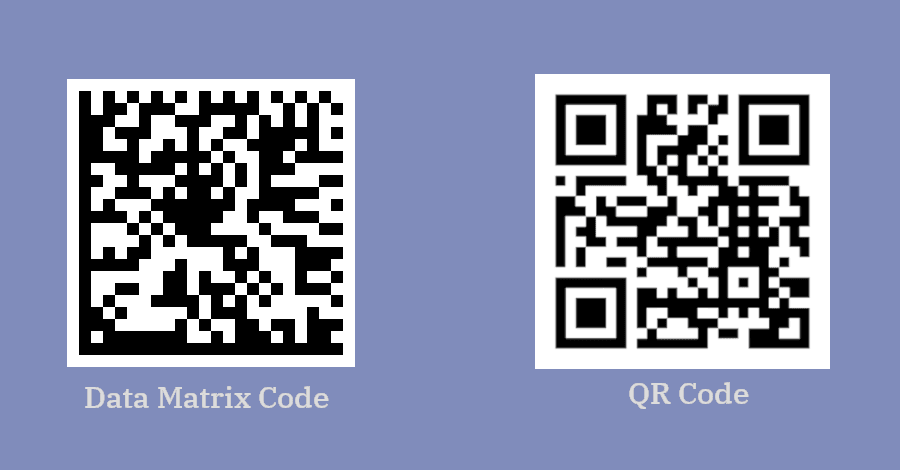
While many photography systems use QR codes, Snapizzi uses Data Matrix codes because they can encode information very efficiently in a compact symbol, making them well suited for printed camera cards and paperless workflows.

Both technologies serve a similar purpose: helping photographers identify students and connect photos to the correct records during processing.

Understanding how these codes work can help explain why modern photography workflows are faster, more accurate, and easier to manage than traditional manual methods.


Note: Although we refer to them as QR codes throughout much of our website because that's the terminology most photographers recognize, Snapizzi actually uses Data Matrix codes. We chose Data Matrix technology because it provides a compact and efficient way to encode information, making it well suited for our paperless camera card workflow.


Want to learn more? Read our guide on How Do School Photographers Match Photos to Students?


Elementary school girl seated for school picture day while a photography assistant holds an iPad displaying a paperless camera card with a Data Matrix code beneath her chin as a photographer captures the keyframe image in a professional portrait studio.

What Is a Two-Dimensional Code?

A two-dimensional (2D) code is a machine-readable symbol that stores information both horizontally and vertically.

Unlike traditional barcodes, which store data in a single direction, 2D codes can hold significantly more information in a compact space.

Common examples include:

  • QR Codes

  • Data Matrix Codes

  • PDF417 Codes

  • Aztec Codes

These technologies are used in industries ranging from healthcare and manufacturing to shipping, inventory management, and photography.

pull-quote-left

A unique code can be associated with a student record, photographed during picture day, and then used to automatically organize and identify the images that follow.

Why Photographers Use 2D Codes

One of the biggest challenges in school photography is making sure every photo ends up attached to the correct student.

Before automated workflows became common, photographers often relied on:

  • Printed rosters

  • Handwritten notes

  • Manual file organization

  • Image number tracking

These methods worked, but they were time-consuming and prone to errors.

Modern photography workflows use 2D codes to automate much of this process.

A unique code can be associated with a student record, photographed during picture day, and then used to automatically organize and identify the images that follow.

This dramatically reduces the amount of manual sorting required after the event.


How to Tell a QR Code from a Data Matrix Code

At first glance, QR codes and Data Matrix codes can look very similar. Both are square, black-and-white, two-dimensional symbols designed to store information.

The easiest way to tell them apart is by looking at the corners.

  • QR codes have three large square finder patterns in three corners.

  • Data Matrix codes do not have these large corner squares. Instead, they have a solid L-shaped border running along two adjacent sides.

Once you know what to look for, distinguishing between the two becomes easy.


Comparison of a Data Matrix code and a QR code used in school photography workflows to identify students and organize images.
pull-quote-left

If you see three large squares in the corners, you're looking at a QR code. If those corner squares are missing and two sides form a solid "L" shape, you're looking at a Data Matrix code.

QR Codes vs Data Matrix Codes

Although photographers often use the term "QR code" to describe any square scannable code, QR Codes and Data Matrix codes are actually different technologies.

Feature

QR Code

Data Matrix

Visual Identifier

Three large corner squares

Solid L-shaped border

Public Recognition

Very High

Lower

Information Density

High

Very High

Performs Well at Small Sizes

Good

Excellent

Common Uses

Websites, menus, payments

Manufacturing, medical devices, industrial tracking

Used by Snapizzi

No

Yes


For most photography workflows, either technology can be used successfully.

Data Matrix codes are often preferred when a compact symbol is needed because they can efficiently store information in a smaller physical space.

This makes them particularly useful for camera cards, paperless workflows, and other applications where screen space or print space is limited.

pull-quote-left

Although photographers often use the term "QR code" to describe any square scannable code, QR Codes and Data Matrix codes are actually different technologies.

How 2D Codes Are Used in School Photography

A typical workflow may look like this:

  1. Import student information.

  2. Generate a unique code for each student.

  3. Photograph the code before photographing the student.

  4. Associate the following images with that student's record.

  5. Automatically organize and prepare photos for delivery.

This process helps eliminate much of the manual work traditionally required after picture day.

Today, many school photography workflows rely on this approach because it is accurate, scalable, and easy to automate.


Understanding identification codes is only one part of building an efficient workflow.


From Camera Cards to Gallery Delivery

The role of a 2D code doesn't end when the photo is taken.

Once captured, the code becomes part of a larger workflow that may include:

  • Student identification

  • Automated sorting

  • Gallery creation

  • Online delivery

  • Order fulfillment

The code serves as the link between the student and the images throughout the entire process.

Looking Ahead

As school photography workflows continue to evolve, identification technologies will remain an essential part of the process.

Whether they're referred to as QR codes or Data Matrix codes, two-dimensional codes have transformed school photography by making it possible to identify students quickly, reduce manual sorting, and automate workflows from picture day through gallery delivery.